
How to Check Criminal History in Graham County
A useful Graham County criminal history search begins with the public case index, but it should not end there. Arizona Judicial Branch Public Access covers case information from most Arizona courts and requires a verification screen before the case search. eAccess is the separate route for available Superior Court document images. The Graham County Clerk of Superior Court supplies older records, certified copies, and public documents that are not online. The sheriff, each city police department, Arizona DPS, and corrections systems hold other parts of the record.
- Search Public Access for a case number, court, charges, status, and any public disposition.
- Use eAccess or ask the Graham County Clerk for the filed complaint, minutes, judgment, sentence, or a certified copy.
- Check the sheriff booking roster when the question concerns recent or current Graham County jail custody.
- Request the incident or arrest report from the agency that wrote it, which may be the sheriff, a city police department, or Arizona DPS.
- Use the DPS Record Review Packet for your own repository record and ADCRR Inmate Data Search for state-prison custody.
This order follows the record from court index to source document without claiming that one result is a complete rap sheet. A federal case instead belongs in PACER, while federal custody belongs in the Bureau of Prisons locator. Tribal and other agency bookings can also appear on the local roster, so the named booking agency matters.
Four Graham County Criminal Record Systems
Graham County criminal records split into four practical layers. The court layer records what prosecutors filed and how a judge resolved it. The sheriff layer shows local booking or detention and holds sheriff reports. Arizona DPS maintains the restricted fingerprint-based state repository. ADCRR tracks people in state-prison custody. These products overlap, yet none can stand in for all the others.
| Channel | Best use | Key limit |
|---|---|---|
| Public Access, eAccess, and Clerk | Case status, filings, disposition, sentence | Sealed and confidential material is withheld |
| Sheriff and booking roster | Recent booking, jail custody, sheriff records | The roster is not a conviction list |
| Arizona DPS repository | A subject's own record accuracy review | No general public name search |
| ADCRR Inmate Data Search | Arizona state-prison custody | Not a Graham County jail list |
The Graham County departments directory shows the county offices behind several of those channels.
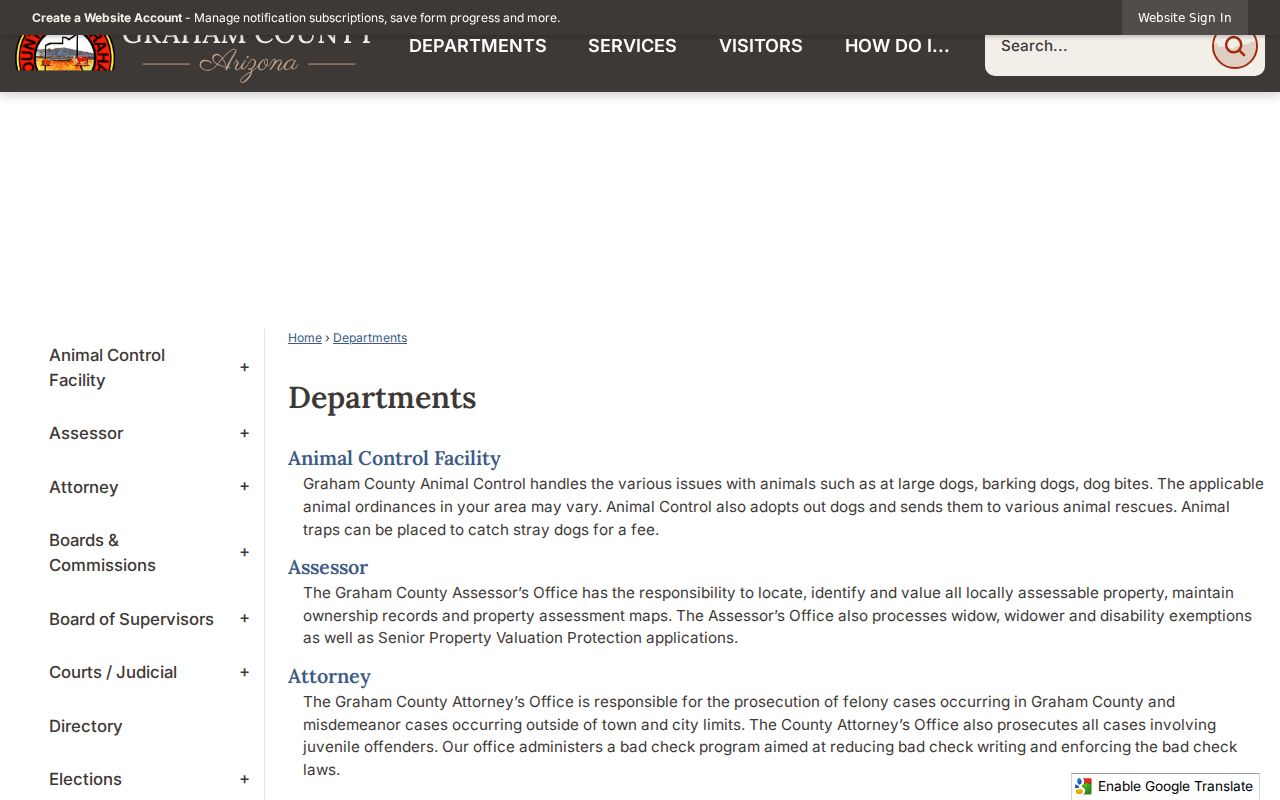
The directory helps separate the Clerk, Sheriff, Probation, County Attorney, and other Graham County offices before a request is sent.
Official Arizona Background Checks
The Arizona Department of Public Safety Central State Repository collects and disseminates fingerprint-based Arizona criminal history under A.R.S. § 41-1750. Arizona does not provide a broad public repository name search. A person may use the DPS Record Review Packet to inspect their own Arizona record for accuracy and completeness and follow DPS procedures to challenge an error. The packet's fingerprint instructions, not the public court index, govern that review.
Graham County residents should follow the current packet instructions and confirm any local fingerprint service with the Graham County Sheriff's Office before arriving. A separate FBI Identity History Summary uses fingerprints for a person's own national record review. It carries an $18 FBI fee, while an approved channeler may charge more. Neither product replaces a Graham County court file or jail record.
The Arizona DPS records request page is the official starting point for the state review process.
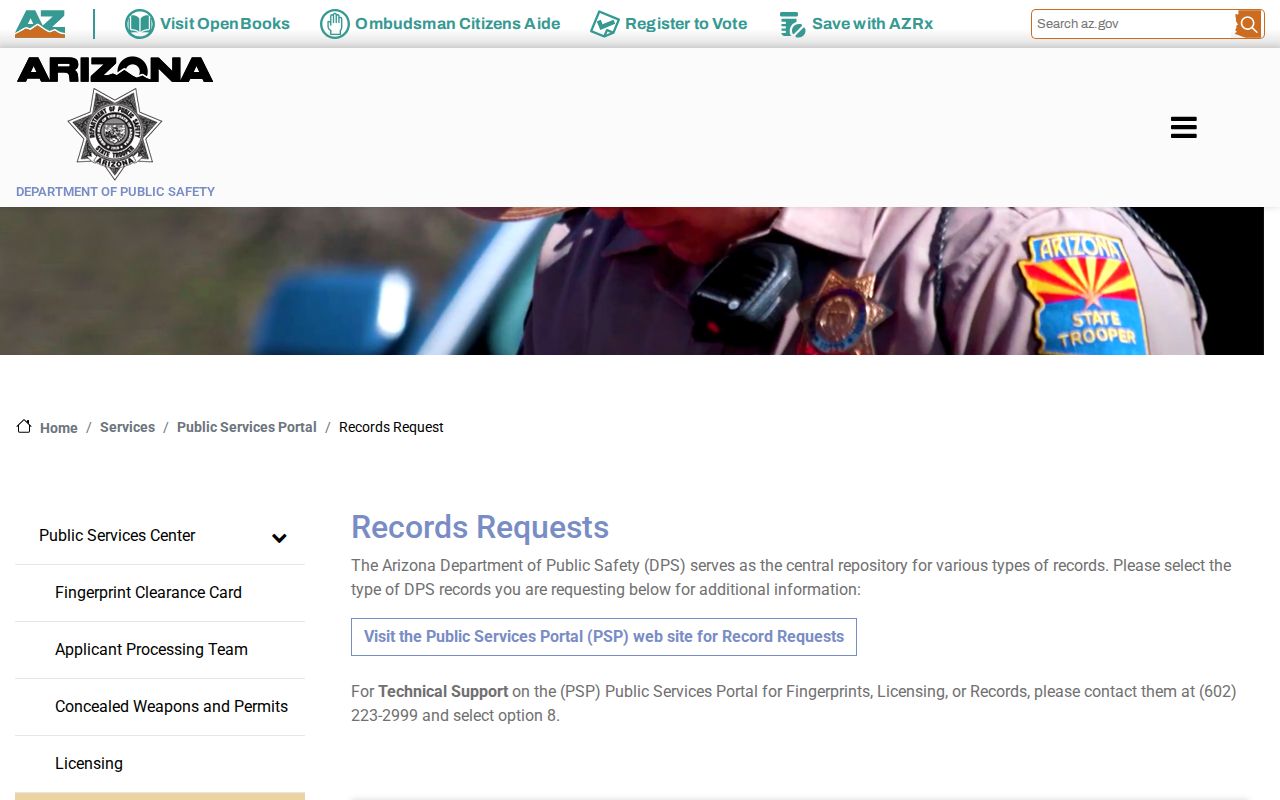
The page keeps subject record review separate from public case, booking, and police-report access.
Note: A court name search is public case research, while a DPS Record Review Packet is a fingerprint-based review of your own repository history.
Graham County Criminal Records and DPS
A common mistake is to call every official result an Arizona background check. Public Access can show a filed Graham County case, but it is not the Central State Repository. A booking roster can confirm jail intake, but it has no disposition field. The DPS record review can show repository entries tied to fingerprints, but the public cannot type another person's name into it. Each source has a different access rule and record owner.
- Case file
- The court's docketed pleadings, hearings, orders, judgment, and sentence.
- Booking entry
- The jail's intake record, which records custody and agency routing rather than guilt.
- Repository record
- The fingerprint-linked criminal history assembled from reportable agency and court submissions.
- Custody locator
- A jail or prison search that answers where a person is held, not every event in a criminal history.
When entries disagree, compare the identifiers and dates, obtain the underlying court disposition, and use the agency's correction or record-review process. A later dismissal or sealing order may not be clear from an old copy.
Types of Criminal Records
Graham County agencies create records at each stage of an event. The responding police agency writes an incident report. An arrest and jail intake create arrest and booking records. Prosecutors create charging papers. Justice, municipal, and Superior Courts create dockets and judgments. Probation and corrections agencies create supervision and custody records. Arizona DPS receives reportable arrest and disposition data for its state repository.
- Police and sheriff reports: narratives, incident facts, and agency evidence records, subject to redaction.
- Arrest and booking records: custody intake and the agency responsible for the booking.
- Criminal court files: filed charges, pleas, hearings, motions, outcomes, and sentences.
- Warrants: court orders tied to a case, failure to appear, noncompliance, or probation matter.
- Supervision and registry records: probation, post-prison reentry, and public sex offender information under their own rules.
No official Graham County sheriff warrant database was located in the research. A warrant check therefore starts with the court that issued it, followed by the sheriff for custody or execution questions. A municipal matter, Justice Court case, and Superior Court felony may require three different calls.
Graham County Booking Records Are Limited
The Graham County Booking Roster is a public PDF rather than a name-search database. Its inspected columns are Name Number, Name, Initial Booking, and Booked For. The last field identifies an agency such as the sheriff, Safford Police, Thatcher Police, Pima Police, Arizona DPS, probation, a tribal agency, or another agency. It does not show charges, bond, a mugshot, court date, release date, housing unit, or disposition.
| Name Number | An internal jail or person number. |
|---|---|
| Name | The person listed on the public roster; names are not republished here. |
| Initial Booking | The jail intake date and time. |
| Booked For | The arresting or booking agency, not the charge or case outcome. |
A roster entry should lead to the correct agency report and court case, not to an assumption of conviction. If charges do not appear, search Public Access, call the relevant court, or request the releasable record from the arresting agency. The dedicated Graham County arrest history page follows each of those channels.
What a Graham County Criminal Record Shows
The contents depend on the product. A Graham County Superior Court file may contain a case number, party caption, charges, complaint or indictment, hearing minutes, bond entries, motions, judgment, sentence, restitution, fines, and disposition. A DPS repository record may include identity and fingerprint segments, state identifiers, arrest cycles, submitting agencies, charges, dispositions, and custody or supervision entries. The public jail roster carries only four basic columns.
| Name and Identifiers | Names, aliases, date-of-birth data where releasable, fingerprints or state identifiers in restricted systems. |
|---|---|
| Arrest and Booking | Date, agency, intake event, and internal jail number, with more detail held off the public roster. |
| Charges and Statutes | The alleged offenses at arrest and the charges later filed in court, which may differ. |
| Disposition | Dismissal, acquittal, conviction, plea, or another court resolution for each count. |
| Sentence | Jail, prison, probation, fines, restitution, and other orders after conviction. |
| Custody or Supervision | County detention, state imprisonment, probation, or post-prison community status in the relevant system. |
Read charges and outcomes separately. An arrest allegation can change before filing, and a filed count can later be reduced or dismissed.
Routing Graham County Criminal Record Requests
The writer of the report remains the first records contact. Graham County Sheriff records use the county or sheriff request process. Safford directs police reports, photos, and video to Safford Police. Thatcher accepts police public-record requests and says accident reports may be requested at the department during weekday business hours. Pima police reports should begin with the town Police Department. Arizona DPS handles trooper records through its own services.
Clerk of Superior Court
800 W. Main Street
Safford, AZ 85546
928-428-3100
Monday-Friday, 8 a.m.-5 p.m.
Sheriff and Adult Detention
600 W. Graham Canal Road
Safford, AZ 85546
928-428-3141
Administrative hours Monday-Friday, 8 a.m.-5 p.m.
Graham County Justice Court
800 W. Main Street
Safford, AZ 85546
928-428-1210
Monday-Thursday, 7 a.m.-6 p.m.
Graham County Probation
919 W. Thatcher Blvd.
Safford, AZ 85546
928-428-3955
Monday-Friday, 8 a.m.-5 p.m.
That division of work explains why a jail record request will not produce a municipal citation file and why a court clerk does not supply the police narrative.
Public Access Laws
Arizona Public Records Law generally opens public records to inspection and copying during office hours, but confidentiality, sealing, redaction, and repository restrictions still apply. Graham County's forms distinguish noncommercial requests from commercial use. A custodian may require advance payment for copying or postage. The existence of a public case index does not make every filed document public.
Key Arizona laws:
A.R.S. § 39-121 states the general public inspection rule.
A.R.S. § 39-121.01 covers copies, printouts, photographs, office hours, and advance payment.
A.R.S. § 39-121.03 requires disclosure for commercial purpose and authorizes remedies for misuse.
A.R.S. § 41-1750 governs the DPS Central State Repository and its restricted dissemination.
A.R.S. § 13-911 provides the petition process for eligible criminal case record sealing.
The Arizona Legislature's public-records title provides the primary statutory text.
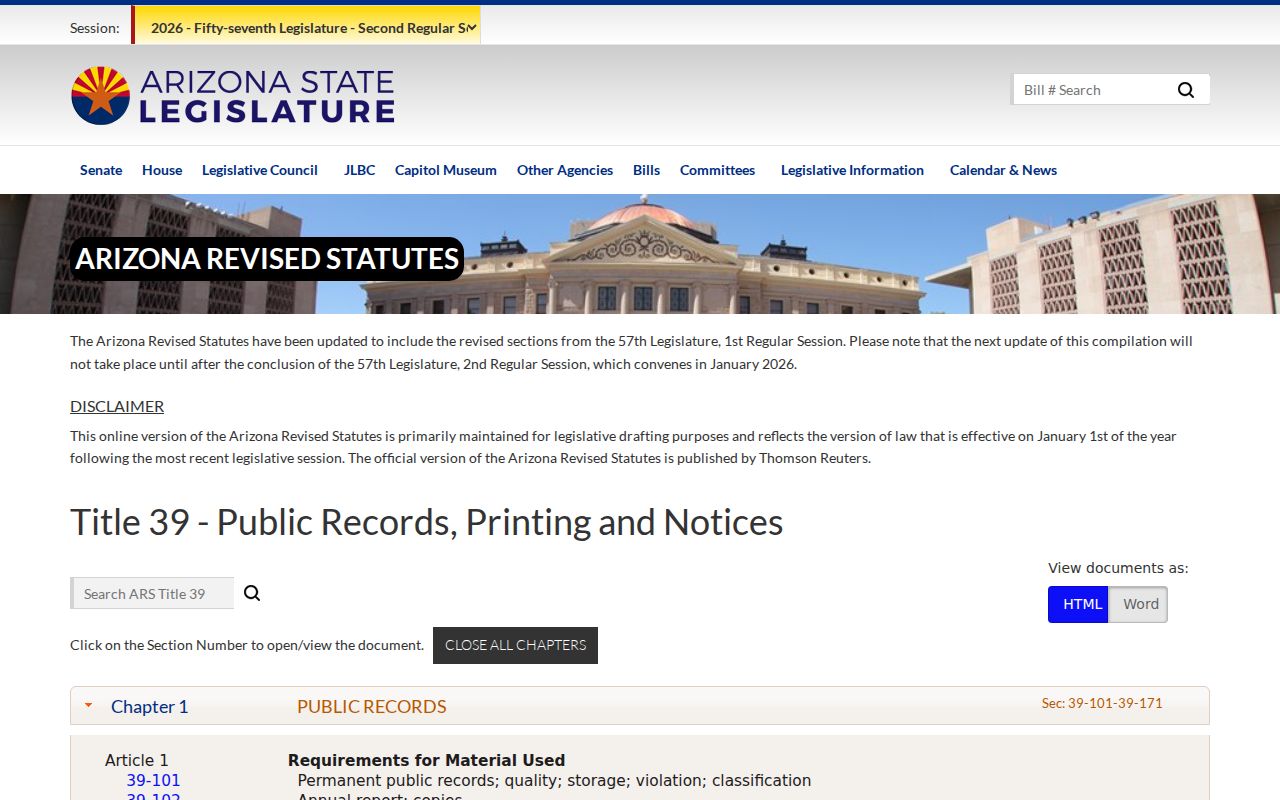
The law supports access while leaving agency-specific confidentiality and dissemination limits in place.
Graham County Criminal Record Request Forms
Graham County offers an online verified statement for noncommercial public-record requests, while the Sheriff's Office supplies a separate PDF. Both ask whether the requester wants to inspect or reproduce the record, require a specific description and purpose, and include certification under A.R.S. § 39-121.03. The online form also asks for contact details, an electronic signature, and reCAPTCHA. The sheriff form warns processing may take up to ten days and includes a fee or deposit agreement.
Use the sheriff form for sheriff-held reports, booking questions, and records that are not exposed in a database. State the event, date, location, involved agency, report or case number if known, and the precise document sought. Broad requests can slow the custodian's search. The research did not confirm a criminal-report copy price, so a requester should ask for the current cost before choosing reproduction.
Note: The sheriff's fees page states cash or money orders for listed services, but no verified criminal-report copy amount was found.
Sealed, Expunged & Restricted
Arizona distinguishes sealing a criminal case record from setting aside a judgment. Under A.R.S. § 13-911, an eligible person may petition to seal arrest, charging, conviction, and related case records from ordinary public access. The statute generally gives the process a 60-day waiting point after the court receives the petition unless the prosecutor and victim file non-objection. A.R.S. § 13-905 allows a court to set aside a judgment after eligible conditions are met, but a set-aside does not necessarily hide the record.
Arizona uses expungement in narrower contexts, including certain marijuana offenses. Juvenile, sealed, and confidential files are not ordinary public lookup records. The Clerk of Superior Court confirms that some files are confidential even though most court records are public. A person reviewing an old entry should obtain the current court order or disposition rather than rely on a saved search result.
Sealing can affect public visibility, yet authorized justice access and statutory exceptions may remain. Questions about eligibility, filing, or legal effect should go to the court or qualified legal counsel. The court handling the case is the source for the resulting order.
Graham County Criminal Supervision Records
Graham County Probation handles adult and juvenile supervision under Superior Court jurisdiction. Its published context says the adult department is responsible for 650 probationers nationwide and directly monitors about 500 countywide. The juvenile department is responsible for 150 matters countywide, including diversion, standard supervision, intensive probation, and pending cases. Those figures describe workload, not a public list of supervised people.
The Graham County Probation page identifies the local office and its adult and juvenile roles.
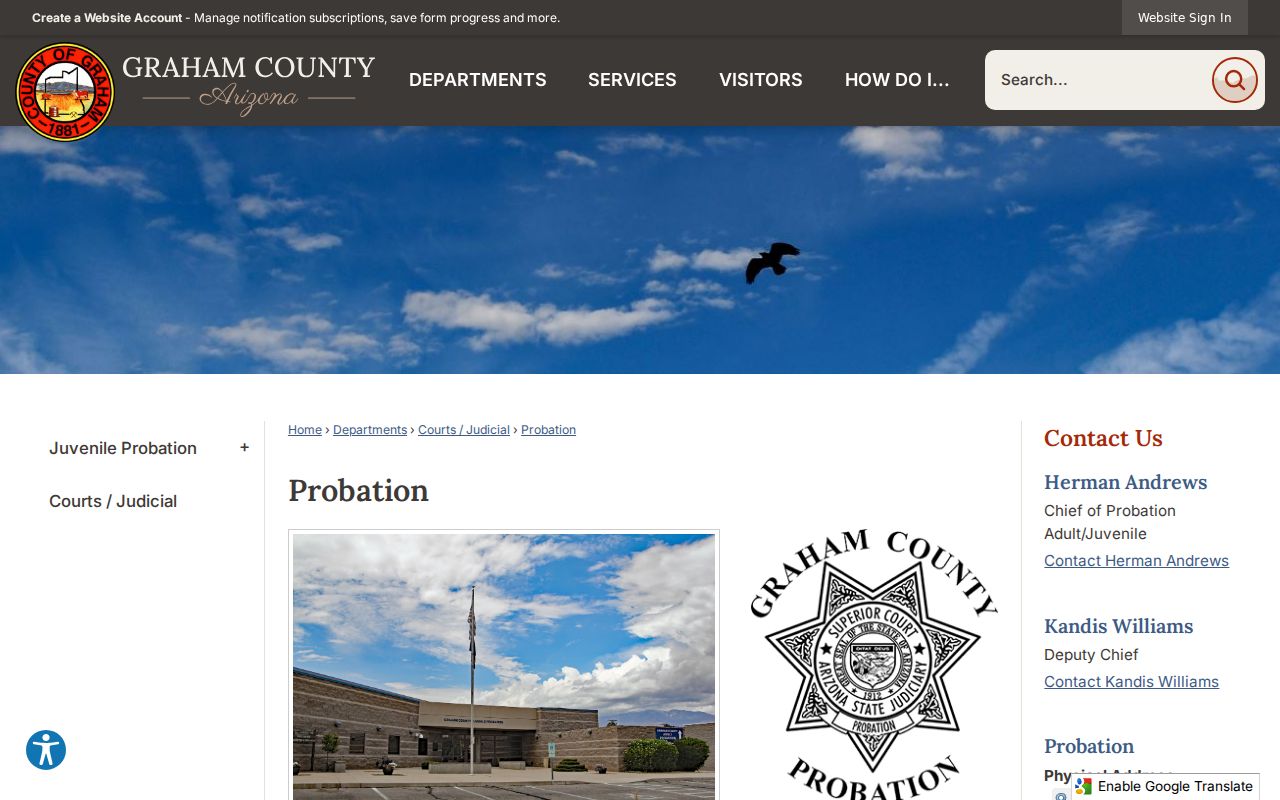
Court dockets are the public route for a probation sentence or revocation filing, while the department controls its supervision records and procedures.
The Graham County Attorney page shows the office that prosecutes county felony cases, outside-city misdemeanors, and juvenile matters.
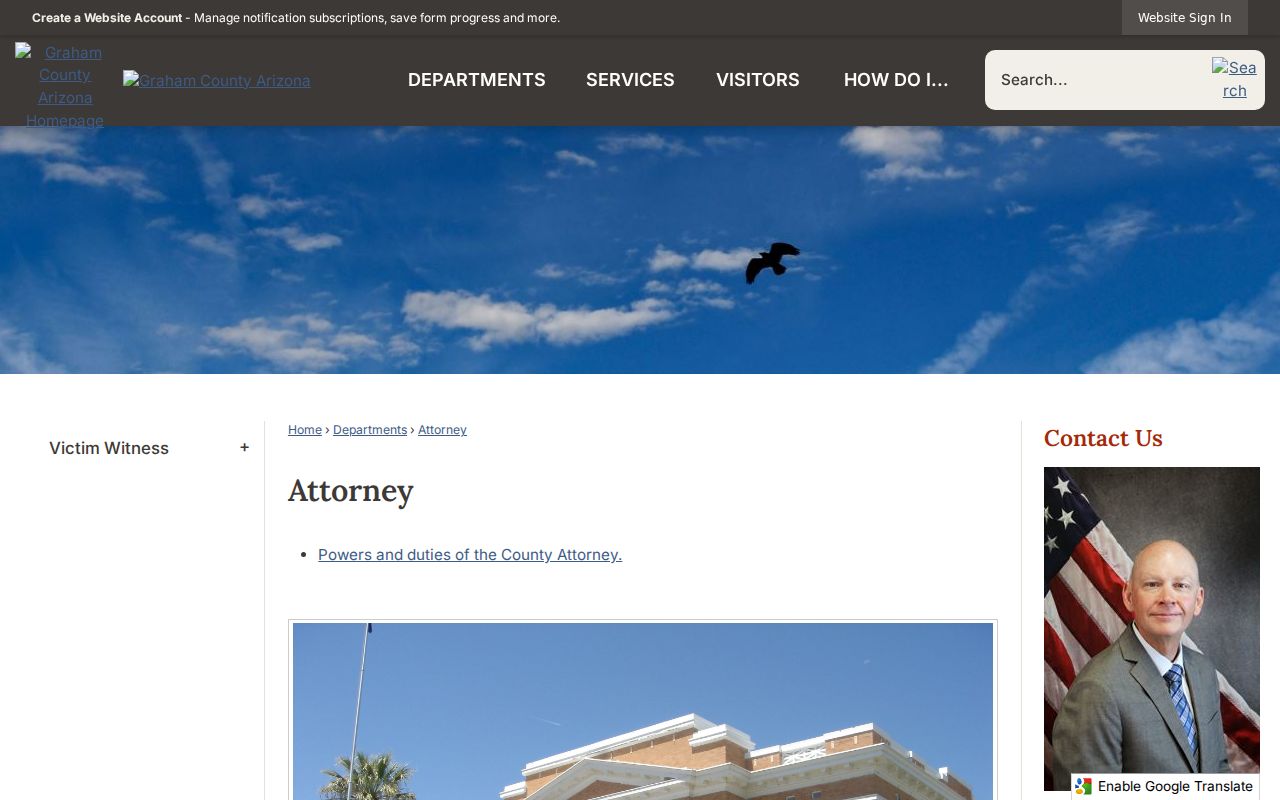
That charging role helps explain why an arrest report and a later court charge may use different allegations or counts.
Criminal Records by City in Graham County
Safford, Thatcher, and Pima police create their own reports, while their local courts or the proper county court handle the resulting cases. Safford routes police reports, photos, and video to its Police Department and operates Gila Valley Consolidated Municipal Court. Thatcher has a Police Department public-record channel and a municipal record search limited to Thatcher Police citations. Pima Police is the local report contact, while Justice of the Peace Number 2 handles Pima precinct obligations.
Safford Criminal History
2020 population 10,129 · Police records and GVC Municipal Court routing.
Thatcher Criminal History
2020 population 5,231 · Police requests and Thatcher citation searches.
Pima Criminal History
2020 population 2,847 · Town Police and Justice Court Number 2 contacts.
City records can then flow to the Graham County jail, county courts, or Arizona DPS based on custody, charge level, and reporting rules.
Graham County Criminal Custody Layers
Custody searches change with the facility. The Graham County booking roster covers local jail intake. A person sentenced to Arizona state prison moves to ADCRR's statewide locator. Federal custody belongs in the Bureau of Prisons locator. ADCRR itself tells users to verify offense details with the Clerk of the Court where the case was adjudicated, which is a useful reminder that a locator is not a complete case record.
The Arizona Department of Corrections, Rehabilitation and Reentry is the state-prison and reentry source.
Its inmate search should be used after state-prison placement, not for recent Graham County jail detention.
The Arizona Board of Executive Clemency provides the state's parole and clemency layer.
ADCRR Community Reentry supervises people released to the community, while the Board holds its separate parole and clemency authority.
The Arizona DPS Crime Statistics portal supplies official jurisdiction-level crime data for county and city agencies.
Agency counts should not be treated as a complete county total because the Graham County roster also shows bookings from state, probation, tribal, and other agencies.